
Connecting research efforts across Pitt's academic schools and centers will help produce a larger impact on Pitt's sustainability research constellation.
As outlined below, four research themes are currently in focus, with environmental and climate justice acting as a thread that weaves through them all—and helps guide each research thrust.


A research cluster focused on creative, critical, curatorial, communicative and political dimensions of sustainability research and challenges.
Themes may include degrowth/growth, preserving our past to understand our future, climate anxiety, environmental justice, film studies, and media disinformation.
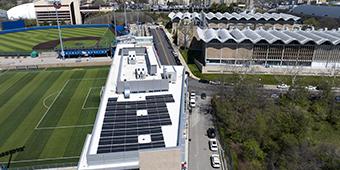
We recognize that our current models of consumption and production are unsustainable. We envision communities that thrive within planetary boundaries while developing and implementing solutions that provide equitable and just opportunities for all.
Themes may include water equity, circular economy and sustainable materials, complex sustainable systems, and just energy transition.

The Resilient Ecological Systems Initiative is an integrated, cross-cutting effort to coordinate student experience, connect people, and build an understanding of socio-ecological systems through research and education at the University of Pittsburgh.
Themes may include water, ecosystems, biodiversity, and ecological justice and natural resources.
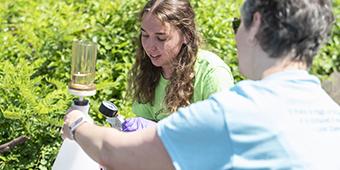
Pittsburgh and the greater southwest Pennsylvania region are impacted by industry and energy extraction and are crucibles for reducing inequality. Strong translational research with community engagement will forge new advances that allow this region to become a model of thriving communities.
Themes may include climate and health, sustainable healthcare, urban food, community resilience and equitable built environments.